TVS Orbiter
View the main image and bike details below.
No video added yet.
Bike Variants (2)
Compare prices and specifications for this bike.
- Upcoming variants: 0
- Discontinued variants: 0
| Variant | Price | Engine / motor | Mileage / range | Transmission | ABS | Action |
|---|---|---|---|---|---|---|
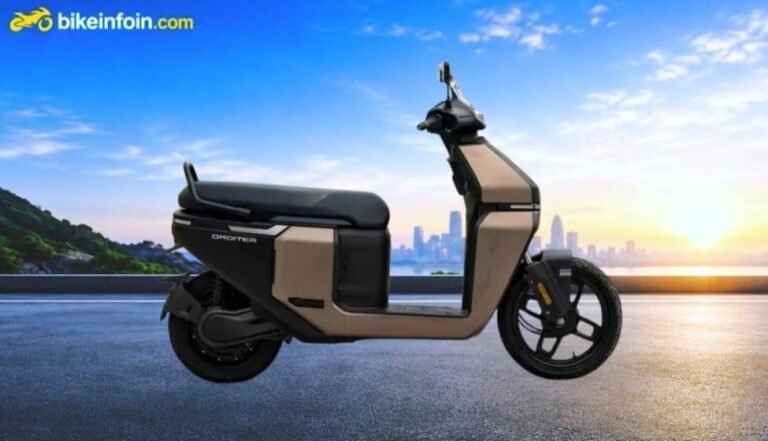 TVS Orbiter V1Available | ₹84,500 | 1.8 kW | 86 km/charge | Automatic | CBS | |
 TVS Orbiter V2Available | ₹84,500 | 3.1 kWh kW | 158 km/charge | Automatic | CBS |
No variants match these filters.
Compare selected variants
Specifications
Engine & Performance10 specs
Brakes & Safety4 specs
Dimensions & Comfort4 specs
Features & Ownership10 specs
Rating & Reviews
No reviews yet
Be the first to share your experience with this bike.
Recent Reviews (0)
No reviews match these filters.
TVS Orbiter Electric Scooter: Design, Features, Range and Practical Review
Table of Contents
- About the TVS Orbiter
- Design and Everyday Comfort
- Electric Motor and Riding Performance
- Battery, Range and Charging
- Features and Smart Connectivity
- Braking, Tyres and Safety
- Storage and Daily Practicality
- TVS Orbiter Pros and Cons
- Who Should Consider the TVS Orbiter?
- Frequently Asked Questions
- Final Verdict
About the TVS Orbiter
The TVS Orbiter is an electric scooter developed by TVS Motor Company for everyday urban commuting. It combines a practical scooter layout with electric propulsion, connected technology and features designed to make routine journeys more convenient. Rather than focusing exclusively on sporty styling, the Orbiter emphasises comfort, storage, accessible controls and the potential benefits of electric mobility.
The scooter was introduced in India in August 2025. Its design includes a long, flat seat, a straight footboard and a distinctive front-wheel arrangement. These elements are intended to support everyday usability, whether the rider is travelling to work, visiting nearby shops or making regular trips around the city.
The Orbiter range includes the V1 and V2 variants, which differ primarily in battery capacity, claimed range, weight and charging characteristics. Choosing between them involves considering daily travel distance, charging access and budget rather than relying on the variant name alone.
Design and Everyday Comfort
The TVS Orbiter has a clean, contemporary design with an upright riding position and bodywork shaped for everyday use. Its styling is different from that of a conventional petrol scooter, while retaining the familiar step-through layout that many urban riders prefer.
One of its practical design features is the straight footboard. It provides a usable area for positioning the feet and can make getting on and off the scooter more convenient during frequent stops. The long, flat seat is designed to offer room for the rider and passenger, although individual comfort will depend on body proportions and journey length.
The Orbiter also features a 14-inch front wheel paired with a smaller rear wheel. The larger front wheel is intended to support stability and help the scooter handle typical urban road conditions. Actual ride quality still depends on tyre pressure, suspension tuning, road surface and riding speed.
For buyers who use a scooter every day, these design details can matter as much as appearance. A comfortable riding position, accessible controls and a practical footboard can make regular short journeys easier.
Electric Motor and Riding Performance
The TVS Orbiter uses a brushless DC (BLDC) electric motor. Unlike a petrol engine, an electric motor delivers power without combustion, engine idling or conventional gear changes. This gives the scooter a straightforward riding experience that can be convenient in stop-and-go city traffic.
The Orbiter offers Eco and City riding modes. These modes provide different approaches to power delivery and energy use, allowing riders to select a setting that suits their journey. Eco mode is intended to support efficient riding, while City mode offers an alternative for everyday urban conditions. Actual energy consumption depends on acceleration, speed, passenger load, traffic and terrain.
The scooter also has forward and reverse parking assistance, which can help when manoeuvring in a confined parking area. This is especially useful when the rider needs to position the scooter in a tight space, although it does not replace careful observation of surrounding people and obstacles.
The Orbiter is primarily designed for urban commuting. Buyers should evaluate its performance against their regular routes, including road speeds, traffic conditions and the distance between destinations.
Battery, Range and Charging
Battery capacity and claimed range are important considerations when choosing an electric scooter. TVS offers the Orbiter in V1 and V2 configurations, with different battery capacities and published IDC range figures.
The manufacturer’s published figures list the V1 with a 1.8 kWh battery and a claimed IDC range of 92 km. The V2 uses a 3.1 kWh battery and has a claimed IDC range of 158 km. These are test-cycle figures, not guarantees of the distance every owner will achieve in everyday conditions.
Real-world range can be affected by riding speed, frequent acceleration, traffic congestion, passenger weight, road gradients, temperature and battery condition. Riders who regularly travel longer distances should allow a practical reserve instead of planning every journey around the maximum claimed range.
Charging time also differs by variant and charger. The standard charging arrangement and compatible optional charger can affect how long it takes to recharge the battery. Before buying, check the current charging specifications for the exact variant and understand whether the intended parking location has a suitable electrical connection.
For people who charge at home, establishing a regular charging routine can make electric commuting easier. Those who rely on public charging should check the availability, compatibility and cost of nearby charging facilities before deciding which variant is suitable.
Features and Smart Connectivity
The TVS Orbiter includes a digital instrument console and connected features designed to make everyday riding more convenient. Its 5.5-inch colour LCD display presents riding information and supports functions associated with the scooter’s SmartXonnect connectivity system.
Depending on the supported feature and connected phone, the system can provide turn-by-turn navigation, call and message alerts, phone charge information and other notifications. These functions can help riders access useful information without relying entirely on a separate navigation device.
The connected mobile application also supports functions such as checking the scooter’s status and locating its last parked position. Other listed safety and convenience functions include geofencing, live location, crash or fall alerts and anti-theft alerts. Availability may depend on connectivity, app settings, software support and the manufacturer’s current service conditions.
The Orbiter also offers cruise control and hill-hold assistance. Cruise control can help maintain a selected speed in suitable riding conditions, while hill-hold assistance is designed to help prevent unwanted movement on an incline when activated correctly.
These features add convenience, but riders should understand their operation through the owner’s manual. Electronic assistance does not replace attentive riding, safe speed selection or awareness of surrounding traffic.
Braking, Tyres and Safety
The TVS Orbiter uses drum brakes and a Combined Braking System (CBS). CBS is designed to distribute braking force between the wheels when the relevant brake control is applied, helping the scooter slow in a more coordinated manner.
Unlike an anti-lock braking system, CBS does not provide the same function as ABS. Riders should therefore maintain a safe following distance, adjust speed to road conditions and avoid assuming that electronic or combined braking can eliminate every risk.
The scooter uses tubeless tyres and alloy wheels. Tubeless tyres are common on modern scooters and can make certain puncture situations easier to manage than traditional tube-type setups, although a damaged tyre still requires proper inspection and repair.
Regularly checking tyre pressure, tread condition, brake operation and lighting is important for safe daily use. The owner’s manual and authorised service centre should be used as references for maintenance intervals and replacement requirements.
Storage and Daily Practicality
Under-seat storage is an important consideration for people who use a scooter for shopping, commuting or other everyday errands. The TVS Orbiter offers a 34-litre under-seat storage compartment, providing space for selected personal items and daily essentials.
The actual items that fit will depend on their shape and dimensions. Riders should confirm that bags or other belongings fit securely and do not interfere with the seat closing or the scooter’s operation.
The long seat and straight footboard further support the Orbiter’s commuter-focused design. These features can be useful for frequent short journeys, although passenger comfort and ease of handling should ideally be assessed in person.
Running costs are another part of daily practicality. An electric scooter does not require petrol, but ownership still involves electricity, tyres, scheduled servicing and possible replacement parts. Actual savings compared with a petrol scooter depend on local electricity and petrol prices, annual distance travelled and the cost of ownership.
TVS Orbiter Pros and Cons
Pros
- Electric commuting: Electric propulsion offers an alternative to petrol-powered scooters for everyday city travel.
- Choice of variants: V1 and V2 provide different battery and range options to suit different commuting requirements.
- Practical storage: The 34-litre under-seat compartment provides useful room for everyday belongings.
- Comfort-oriented layout: The long seat and straight footboard support a practical urban riding position.
- Connected features: SmartXonnect supports navigation-related functions, alerts and selected scooter information.
- Useful assistance features: Cruise control, hill-hold assistance and parking assistance add convenience in suitable conditions.
- Tubeless tyres: These are a practical feature for everyday scooter use.
Cons
- Range varies in real use: The claimed IDC range may differ from the distance achieved in daily traffic and changing weather.
- Charging requires planning: Riders need access to a compatible power supply or suitable charging facility.
- Drum brakes with CBS: The braking setup does not provide the same anti-lock function as ABS.
- Connected features have dependencies: Some functions may require a compatible phone, app access, connectivity or an active service.
- Variant choice matters: Buyers need to compare battery capacity, range and charging requirements carefully before selecting V1 or V2.
Who Should Consider the TVS Orbiter?
The TVS Orbiter may suit people looking for an electric scooter for regular city commuting, local errands and predictable daily routes. It may be especially convenient for riders who can charge at home or at another regular parking location.
The V1 may be worth considering for riders whose daily journeys fit its available range and who want the smaller-battery configuration. The V2 may suit people who need more claimed range between charges. In either case, the right choice depends on actual daily distance, charging access and ownership budget.
Riders who frequently travel long distances between cities, have no reliable charging arrangement or regularly need to cover journeys close to the scooter’s maximum claimed range should evaluate their requirements carefully. A test ride and a realistic charging plan can help determine whether the Orbiter fits their routine.
Frequently Asked Questions
What is the TVS Orbiter?
The TVS Orbiter is an electric scooter from TVS Motor Company designed primarily for everyday commuting. It combines an electric powertrain with practical storage, a digital display and connected features.
How many variants does the TVS Orbiter have?
TVS lists two variants: the Orbiter V1 and Orbiter V2. Their main differences include battery capacity, claimed IDC range, kerb weight and charging characteristics. Check the official website for the latest variant details.
What is the claimed range of the TVS Orbiter?
The manufacturer’s published figures list a claimed IDC range of 92 km for the V1 and 158 km for the V2. Actual range may vary with speed, traffic, load, terrain, temperature and riding style.
How long does the TVS Orbiter take to charge?
Charging time depends on the variant, battery charge level and charger used. TVS publishes different charging figures for the V1 and V2 and for compatible standard or optional chargers. Confirm the applicable charging time for the exact version before purchasing.
Does the TVS Orbiter have smartphone connectivity?
Yes. The Orbiter supports SmartXonnect features, including supported notifications, navigation-related functions and scooter information through the connected system. Some functions depend on phone compatibility, connectivity and app settings.
Does the TVS Orbiter have cruise control?
Yes. Cruise control is among the features listed by TVS for the Orbiter. Riders should consult the owner’s manual to understand when and how it can be used safely.
Is the TVS Orbiter suitable for daily commuting?
It may be suitable for daily commuting when its real-world range, charging requirements, riding performance and storage meet the owner’s needs. Riders should consider their typical route and access to charging before choosing a variant.
Does the TVS Orbiter have ABS?
The published specifications list drum brakes with a Combined Braking System (CBS). CBS is not the same as ABS, so buyers should not assume that the scooter has anti-lock braking.
Where can I check the latest TVS Orbiter price and specifications?
Visit the official TVS Orbiter website for current variant details, pricing, features and availability. Prices and offers can change by location and date, so confirm the final details with an authorised dealer.
Final Verdict
The TVS Orbiter is a practical electric scooter built around the needs of everyday urban riders. Its comfortable layout, under-seat storage, connected display and convenience features give it a clear commuter-focused identity.
The V1 and V2 variants offer different battery and range options, making it important to choose according to real travel requirements rather than relying only on the headline range figure. Charging access, local service support, braking expectations and total ownership costs should all form part of the decision.
For riders whose daily journeys suit its capabilities and who have a workable charging arrangement, the TVS Orbiter is worth considering as an electric alternative to a conventional petrol scooter.
Disclaimer: Specifications, features, prices and availability may change. Information should be verified against the latest official TVS Motor Company details and the applicable variant before making a purchase decision.
Related Bikes
KTM RC 390
Avg. Ex-Showroom price
- Engine373 cc
- Mileage28 kmpl
- FuelPetrol
Bajaj Dominar 400
Avg. Ex-Showroom price
- Engine373.3 cc
- Mileage30 kmpl
- FuelPetrol

Bajaj Platina 100
Avg. Ex-Showroom price
- Engine102 cc
- Mileage70 kmpl
- FuelPetrol

Kawasaki KLX230
Avg. Ex-Showroom price
- Engine233 cc
- Mileage40 kmpl
- FuelPetrol